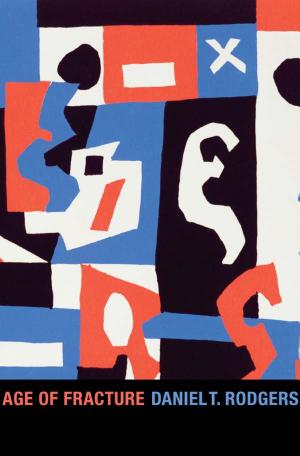
Age of Fracture
In the last quarter of the twentieth century, the ideas that most Americans lived by started to fragment. Mid-century concepts of national consensus, managed markets, gender and racial identities, citizen obligation, and historical memory became more fluid. Flexible markets pushed aside Keynesian macroeconomic structures. Racial and gender solidarity divided into multiple identities; community responsibility shrank to smaller circles. In this wide-ranging narrative, Daniel Rodgers shows how the collective purposes and meanings that had framed social debate became unhinged and uncertain. Age of Fracture offers a powerful reinterpretation of the ways in which the decades surrounding the 1980s changed America. Through a contagion of visions and metaphors, on both the intellectual right and the intellectual left, earlier notions of history and society that stressed solidity, collective institutions, and social circumstances gave way to a more individualized human nature that emphasized choice, agency, performance, and desire. On a broad canvas that includes Michel Foucault, Ronald Reagan, Judith Butler, Charles Murray, Jeffrey Sachs, and many more, Rodgers explains how structures of power came to seem less important than market choice and fluid selves. Cutting across the social and political arenas of late-twentieth-century life and thought, from economic theory and the culture wars to disputes over poverty, color-blindness, and sisterhood, Rodgers reveals how our categories of social reality have been fractured and destabilized. As we survey the intellectual wreckage of this war of ideas, we better understand the emergence of our present age of uncertainty.
Buy this book at Amazon- Publisher
- Harvard University Press
- Year
- 2012
- ISBN-13
- 9780674064362
- Genre
- History
- Topics
- Late 20th-century American intellectual historyPolitical and economic ideologyIdentity and culture wars
Awards
- Bancroft PrizeWon(2012)
If you liked Age of Fracture, you could also like these
The Unwinding: An Inner History of the New America
George Packer
1 win · 16 score
People of Paradox: An Inquiry Concerning the Origins of American Civilization
Michael Kammen
1 win · 12 score
Civic Ideals: Conflicting Visions of Citizenship in U.S. History
Rogers Smith
0 wins · 4 score

Awakening from the American Dream
Rufus E. Miles, Jr.
0 wins · 4 score
Fear Itself: The New Deal and the Origins of Our Time
Ira. Katznelson
1 win · 8 score
Grand Expectations: The United States, 1945–1974
James T. Patterson
1 win · 8 score

Call Them by Their True Names: American Crises (and Essays)
Rebecca Solnit
1 win · 8 score

Fear of Falling: The Inner Life of the Middle Class
Barbara Ehrenreich
0 wins · 4 score

Barbarian Sentiments: How the American Century Ends
William Pfaff
0 wins · 4 score

The Culture of Narcissism: American Life in an Age of Diminishing Expectations
Christopher Lasch
1 win · 12 score
The End of the Myth: From the Frontier to the Border Wall in the Mind of America
Greg Grandin
1 win · 16 score
The Transformation of American Law, 1780–1860
Morton J. Horwitz
1 win · 8 score

The Origins of the Urban Crisis: Race and Inequality in Postwar Detroit
Thomas J. Sugrue
1 win · 8 score
The Rise and Fall of American Growth: The U.S. Standard of Living Since the Civil War
Robert J. Gordon
0 wins · 4 score
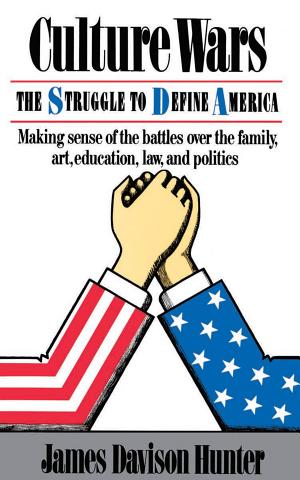
Culture Wars: The Struggle to Define America
James Davison Hunter
0 wins · 3 score