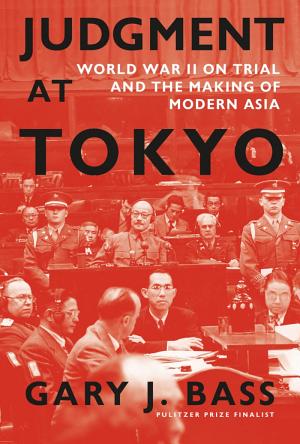
Judgment at Tokyo: World War II on Trial and the Making of Modern Asia
Judgment at Tokyo won the Arthur Ross Book Award from the Council on Foreign Relations and was named a 10 Best Book by the Washington Post, 12 Essential Nonfiction Books by the New Yorker, 100 Notable Books by the New York Times, and Best Book by the Economist, Foreign Affairs, the Times Literary Supplement, and Air Mail. In the weeks after Japan finally surrendered to the Allies to end World War II, the world turned to the question of how to move on from years of carnage and destruction. For Harry Truman, Douglas MacArthur, Chiang Kai-shek, and their fellow victors, the question of justice seemed clear: Japan's militaristic leaders needed to be tried and punished for the surprise attack at Pearl Harbor; shocking atrocities against civilians in China, the Philippines, and elsewhere; and rampant abuses of prisoners of war in notorious incidents such as the Bataan death march. For the Allied powers, the trial was an opportunity to render judgment on their vanquished foes, but also to create a legal framework to prosecute war crimes and prohibit the use of aggressive war, building a more peaceful world under international law and American hegemony. For the Japanese leaders on trial, it was their chance to argue that their war had been waged to liberate Asia from Western imperialism and that the court was victors' justice. For more than two years, lawyers for both sides presented their cases before a panel of clashing judges from China, India, the Philippines, and Australia, as well as the United States and European powers. The testimony ran from horrific accounts of brutality and the secret plans to attack Pearl Harbor to the Japanese military's threats to subvert the government if it sued for peace. Yet rather than clarity and unanimity, the trial brought complexity, dissents, and divisions that provoke international discord between China, Japan, and Korea to this day. Those courtroom tensions and contradictions could also be seen playing out across Asia as the trial unfolded in the crucial early years of the Cold War, from China's descent into civil war to Japan's successful postwar democratic elections to India's independence and partition.
Buy this book at Amazon- Publisher
- Vintage
- Year
- 2023
- ISBN-13
- 9781101947111
- Genre
- History
- Topics
- Tokyo war crimes trialWorld War II in AsiaInternational law and justice
Awards
- Cundill History PrizeShortlisted(2024)
- Mark Lynton History PrizeShortlisted(2024)
Other awarded books from Gary J. Bass
If you liked Judgment at Tokyo: World War II on Trial and the Making of Modern Asia, you could also like these

Implacable Foes: War in the Pacific, 1944-1945
Waldo Heinrichs, Marc Gallicchio
1 win · 8 score

Hirohito and the Making of Modern Japan
Herbert P. Bix
1 win · 12 score
Embracing Defeat: Japan in the Wake of World War II
John Dower
5 wins · 49 score

The Rising Sun: The Decline and Fall of the Japanese Empire, 1936–1945
John Toland
1 win · 12 score

The Great Betrayal: The Evacuation of the Japanese-Americans during World War II
Audrie Girdner and Anne Loftis
1 win · 5 score
Nagasaki: Life After Nuclear War
Susan Southard
1 win · 5 score

The Undeclared War
William L. Langer, S. Everett Gleason
1 win · 8 score
The Deluge: The Great War, America and the Remaking of the Global Order, 1916–1931
Adam Tooze
1 win · 11 score
Postwar: A History of Europe Since 1945
Tony Judt
0 wins · 11 score
Cultures of War: Pearl Harbor/Hiroshima/9-11/Iraq
John W. Dower
0 wins · 10 score

Allies of a Kind: The United States, Britain, and the War Against Japan, 1941–1945
Christopher Thorne
1 win · 8 score
Between War and Peace: The Potsdam Conference
Herbert Feis
1 win · 12 score

Peacemakers: The Paris Peace Conference of 1919 and Its Attempt to End War
Margaret MacMillan
1 win · 12 score
Last Call at the Hotel Imperial: The Reporters Who Took on a World at War
Deborah Cohen
1 win · 5 score
Reckonings: Legacies of Nazi Persecution and the Quest for Justice
Mary Fulbrook
1 win · 11 score