
Rembrandt's Eyes
For Rembrandt as for Shakespeare, all the world was indeed a stage, and he knew in exhaustive detail the tactics of its performance; the strutting and mincing; the wardrobe and the face paint; the full repertoire of gesture and grimace; the flutter of hands and the roll of the eyes; the belly laugh and the half-stifled sob. He knew what it looked like to seduce, to intimidate, to wheedle, and to console; to strike a pose or preach a sermon; to shake a fist or uncover a breast; how to sin and how to atone; how to commit murder and how to commit suicide. No artist had ever been so fascinated by the fashioning of personae, beginning with his own. No painter ever looked with such unsparing intelligence or such bottomless compassion at our entrances and our exits and the whole rowdy show in between. More than three centuries after his death, Rembrandt remains the most deeply loved of all the great masters of painting, his face so familiar to us from the self-portraits painted at every stage in his life, yet still so mysterious. As with Shakespeare, the facts of his life are hard to come by; the Leiden miller's son who briefly found fame in Amsterdam, whose genius was fitfully recognized by his contemporaries, who fell into bankruptcy and died in poverty. So there is probably no other painter whose life has engendered more legends, nor to whom more unlikely pictures have been attributed. The true biography of Rembrandt is to be discovered in his pictures. Through a succession of superbly incisive descriptions and interpretations of Rembrandt's paintings threaded into his narrative, Schama allows us to see Rembrandt's life clearly and to think about it afresh. The book moves far beyond the bounds of conventional biography or art history, conjuring up the world in which Rembrandt moved—its sounds, smells and tastes as well as its politics; the influences on him of the wars of the Protestant United Provinces against Spain, of the extreme Calvinism of his native Leiden, of the demands of patrons and the ambitions of contemporaries; the importance of his beloved Saskia and, after her death (Rembrandt was later forced to sell her grave, so complete was his ruin), of his mistress Hendrickje Stoffels; and, above all, the profound effect on him of the great master of the immediately preceding generation, the Catholic painter from Antwerp, Peter Paul Rubens: "the prince of painters and the painter of princes" with whom Rembrandt was obsessed for the first part of his life, and whose career was the shaping force that drove Rembrandt to test the farthest reaches of his own originality.
Buy this book at AmazonAd- Publisher
- Random House Canada
- Year
- 1999
- ISBN-13
- 9780679309550
- Genre
- Biography & Memoir
- Topics
- Rembrandt's life and art17th-century Dutch Golden AgeArt history and painting techniques
Awards
- Los Angeles Times Book Prize for BiographyShortlisted(1999)
If you liked Rembrandt's Eyes, you could also like these

Rembrandt's Jews
Steven Nadler
0 wins · 4 score
Bernard Berenson: The Making of a Connoisseur
Ernest Samuels
0 wins · 12 score
Caravaggio: A Life Sacred and Profane (biography of Caravaggio)
Andrew Graham-Dixon
0 wins · 4 score
Hogarth: His Life, Art, and Times
Ronald Paulson
0 wins · 4 score

Chagall: A Biography
Jackie Wullschlager
0 wins · 3 score
American Mirror: The Life and Art of Norman Rockwell
Deborah Solomon
0 wins · 3 score

A Life of Picasso: Volume 2. The Cubist Rebel, 1907–1916
John Richardson
0 wins · 3 score
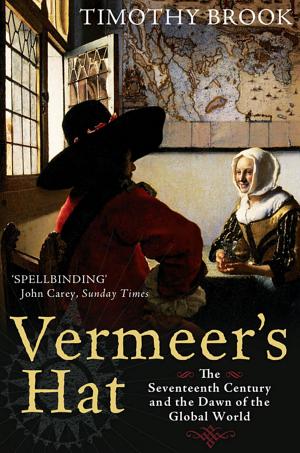
Vermeer's Hat: The Seventeenth Century and the Dawn of the Global World
Timothy Brook
1 win · 5 score

Karl Marx: A Nineteenth-Century Life
Jonathan Sperber
0 wins · 4 score

Modern Art: 19th and 20th Centuries
Meyer Schapiro
0 wins · 4 score

Kafka: The Early Years
Reiner Stach, trans. by Shelley Frisch
0 wins · 2 score
Delmore Schwartz: The Life of an American Poet
James Atlas
0 wins · 4 score
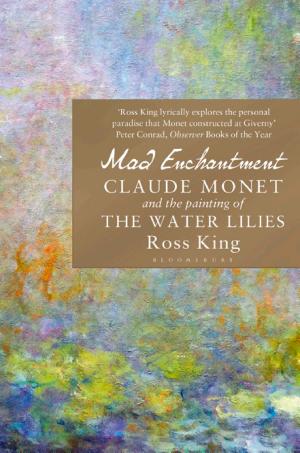
Mad Enchantment: Claude Monet and the Painting of the Water Lilies
Ross King
0 wins · 3 score

Egon Schiele's Portraits
Alessandra Comini
0 wins · 4 score
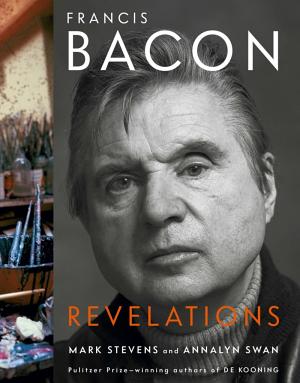
Francis Bacon: Revelations
Mark Stevens and Annalyn Swan
0 wins · 2 score