The Award Tally Magazine · Data story
Lost and Found in Translation: The Rise of Asian Fiction in Translation Prizes
For its first ten years, the International Dagger never shortlisted a book from an East, South or Southeast Asian language. Now it can't get through a year without one. The story of a slow arrival, and of the people who made it possible.
The Award Tally ·
 AI-generated image
In May 2026, Taiwan Travelogue won the International Booker Prize, the first book translated from Mandarin Chinese to do so. It had already won the National Book Award for Translated Literature in 2024. No other book has won both.
It makes a fitting winner, because it is a novel about translation that pretends to be one. Yáng Shuāng-zǐ presents it as the rediscovered travel memoir of a Japanese writer in 1930s Taiwan, complete with footnotes and afterwords. When it came out in Taiwan in 2020, the cover named the invented writer as the author and Yáng as her translator, and some readers believed it. For the English edition, the (real) translator Lin King added footnotes of her own.
So is Asian fiction really winning more, or does it only feel that way? We counted.
From exception to regular
We looked at three prizes for translated books: the International Booker Prize, the National Book Award for Translated Literature and the crime writers' International Dagger. By Asian fiction we mean books first written in an East, South or Southeast Asian language, such as Japanese, Korean, Chinese, Hindi, Kannada or Indonesian.
9 of 31
prizes since 2016 went to Asian fiction
12%
of shortlisted books were Asian, 2016 to 2020
20%
of shortlisted books were Asian, 2021 to 2026
Shortlist places went from 9 of 73 in the first five years to 20 of 99 in the six years since. The wins doubled from three to six. Because Taiwan Travelogue won twice, the nine prizes went to eight books:
- The Vegetarian
- The Emissary
- Tokyo Ueno Station
- The Disaster Tourist
- Tomb of Sand
- Taiwan Travelogue
- Heart Lamp: Selected Stories
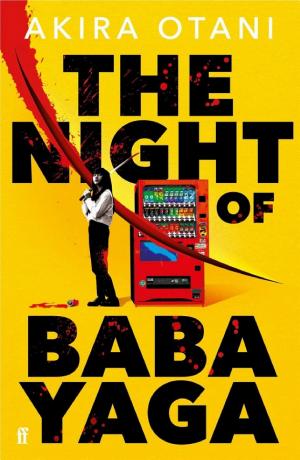
- The Night of Baba Yaga



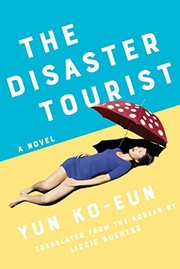
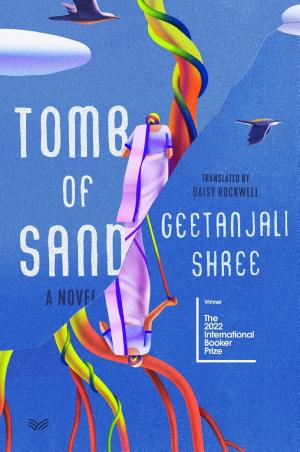


The International Booker shows it best. The Vegetarian by Han Kang won the first edition in its current form, in 2016. Then came five winners from elsewhere. From 2022 on, three of five prizes went to Asian books, each a first: Tomb of Sand was the first winner translated from Hindi, Heart Lamp the first from Kannada and the first story collection, Taiwan Travelogue the first from Mandarin.
The biggest change is in crime fiction. Between 2006 and 2015, the International Dagger shortlisted 60 books, and not one came from an Asian language. Six Four by Hideo Yokoyama was the first, in 2016. Since 2021 there has been at least one every single year, and two winners: The Disaster Tourist by Yun Ko-eun and The Night of Baba Yaga by Akira Otani, the first Japanese winner of the prize.
Some perspective: one book in five is not a takeover, and these numbers are small enough that a single jury can move them. But the direction is the same at the Booker and the Dagger. Only the National Book Award, which started in 2018, held steady: three of 14 shortlisted books up to 2020, five of 28 since.
The long wait
A prize for a translated book says little about when the book was written. Several of the books on our shelf had been around for years before English readers could judge them.
| # | Book | Original | In English | Wait |
|---|---|---|---|---|
| 1 | Territory of LightYūko Tsushima | 1979 | 2019 | 40 years |
| 2 | The Memory PoliceYōko Ogawa | 1994 | 2019 | 25 years |
| 3 | The VegetarianHan Kang | 2007 | 2015 | 8 years |
| 3 | Under the Eye of the Big BirdHiromi Kawakami | 2016 | 2024 | 8 years |
| 5 | The Three-Body ProblemCixin Liu | 2008 | 2014 | 6 years |
| 6 | Tokyo Ueno StationMiri Yu | 2014 | 2019 | 5 years |
| 7 | Taiwan TravelogueYáng Shuāng-zǐ | 2020 | 2024 | 4 years |
| 8 | Tomb of SandGeetanjali Shree | 2018 | 2021 | 3 years |

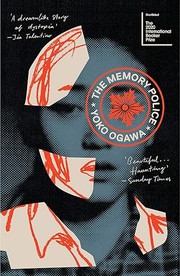

The Memory Police also complicates our count. Was 2020 a good year for Japanese fiction, or was 1994? When a jury discovers a book like this, what has changed isn't the writing. Somebody finally translated it.
Same book, different book
The translator is the one who decides how that book sounds, and sometimes more than that.
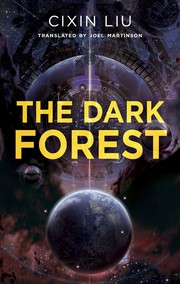
The Three-Body Problem. The English edition opens with the Cultural Revolution. The Chinese book edition doesn't: those chapters come later, reportedly as a precaution against censors. Translator Ken Liu moved them to the front, with Cixin Liu's blessing. He later recalled that many Chinese fans thought it was a mistake that would bore American readers. The book became the first translated novel to win the Hugo.
Heart Lamp. Deepa Bhasthi chose the twelve stories from Banu Mushtaq's work of more than thirty years. She calls her method "translating with an accent": many Kannada words stay in the text, and she has spoken of a "very deliberate Kannada hum".
The Vegetarian. The most argued-over of them all. After the International Booker win, critics in Korea went through Deborah Smith's English version line by line. In one much-quoted example, an arm had become a foot (the Korean words, pal and bal, sound close). The critic Charse Yun cited a study that found 10.9 percent of the novel's first part mistranslated, and still called the translation "a stunning achievement". Smith admitted mistakes. Han Kang stood by her translator.
The jury never read the book the author wrote. It read the book the translator wrote.
The prizes take that seriously. The International Booker splits its £50,000 equally between author and translator.
Where the door is still closed
Outside the translation prizes, the picture is thinner. The Booker Prize itself is only open to books written in English. The Dublin Literary Award has always welcomed translations, and has shortlisted Haruki Murakami and Han Kang. But of its 31 winners since 1996, none was first written in an East, South or Southeast Asian language.
There are cracks. Han Kang's We Do Not Part won the National Book Critics Circle Award for fiction, where translations compete directly with books written in English. Kafka on the Shore won the World Fantasy Award twenty years ago.
Where to start
- For something strange: The Memory Police, about an island where things vanish one after another.
- For a page-turner: The Devotion of Suspect X by Keigo Higashino, shortlisted for the Edgar.
- For big ideas: The Three-Body Problem.
- For short stories: Heart Lamp, or Cursed Bunny by Bora Chung if you don't mind nightmares.
- For the one that won everything: Taiwan Travelogue, preferably not on an empty stomach.
All eighteen of our picks, sorted by mood, are on the shelf Lost and Found in Translation.