Affiliate link: we may earn a commission
Won the Mark Lynton History Prize (2012).
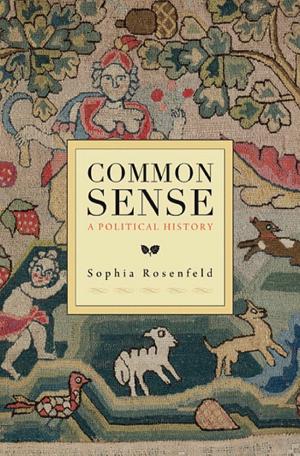
Common sense has always been a cornerstone of American politics. In 1776, Tom Paine's vital pamphlet with that title sparked the American Revolution. And today, common sense—the wisdom of ordinary people, knowledge so self-evident that it is beyond debate—remains a powerful political ideal, utilized alike by George W. Bush's aw-shucks articulations and Barack Obama's down-to-earth reasonableness. But far from self-evident is where our faith in common sense comes from and how its populist logic has shaped modern democracy. Common Sense: A Political History is the first book to explore this essential political phenomenon. The story begins in the aftermath of England's Glorious Revolution, when common sense first became a political ideal worth struggling over. Sophia Rosenfeld's accessible and insightful account then wends its way across two continents and multiple centuries, revealing the remarkable individuals who appropriated the old, seemingly universal idea of common sense and the new strategic uses they made of it. Paine may have boasted that common sense is always on the side of the people and opposed to the rule of kings, but Rosenfeld demonstrates that common sense has been used to foster demagoguery and exclusivity as well as popular sovereignty. She provides a new account of the transatlantic Enlightenment and the Age of Revolutions, and offers a fresh reading on what the eighteenth century bequeathed to the political ferment of our own time. Far from commonsensical, the history of common sense turns out to be rife with paradox and surprise.
Affiliate link: we may earn a commission
- Genre
- History
- Topics
- Political philosophyEnlightenment and Age of RevolutionsPopulism and democracy
- Publisher
- Harvard University Press
- ISBN-13
- 9780674266810
Awards
- 2012Mark Lynton History PrizeWon
Other awarded books from Sophia Rosenfeld
If you liked Common Sense: A Political History, you could also like these
People of Paradox: An Inquiry Concerning the Origins of American Civilization
Michael Kammen
1 win · 12 score
Inventing the People: The Rise of Popular Sovereignty in England and America
Edmund S. Morgan
1 win · 8 score

The Age of the Democratic Revolution: A Political History of Europe and America, 1760–1800
R. R. Palmer
1 win · 12 score

These Truths: A History of the United States
Jill Lepore
3 score
Uncommon Sense: The Heretical Nature of Science
Alan Cromer
3 score

The Glorious Cause: The American Revolution, 1763–1789
Robert Middlekauff
4 score

The Urban Crucible: Social Change, Political Consciousness and the Origins of the American Revolution
Gary B. Nash
4 score
Seedtime of the Republic
Clinton Rossiter
1 win · 8 score
Main Currents in American Thought
Vernon Louis Parrington
1 win · 12 score
Civic Ideals: Conflicting Visions of Citizenship in U.S. History
Rogers Smith
4 score
The First New Nation: The United States in Historical and Comparative Perspective
Seymour Martin Lipset
4 score

The Age of Choice: A History of Freedom in Modern Life
Sophia Rosenfeld
3 score
A People in Revolution: The American Revolution and Political Society in New York, 1760–1790
Edward Countryman
1 win · 8 score
The Empire of Reason: How Europe Imagined and America Realized
Henry Steele Commager
4 score
American Transcendentalism
Philip Gura
4 score
Similar Topics
Anarchy, State, and Utopia
Robert Nozick
1 win · 12 score
Political philosophy
Machiavelli in Hell
Sebastian de Grazia
1 win · 12 score
Political philosophy
The End of History and the Last Man
Francis Fukuyama
1 win · 8 score
Political philosophy
Novus Ordo Seclorum: the Intellectual Origins of the Constitution
Forrest McDonald
4 score
Political philosophy
Hannah Arendt: A Life in Dark Times
Anne Heller
2 score
Political philosophy