Affiliate link: we may earn a commission
History
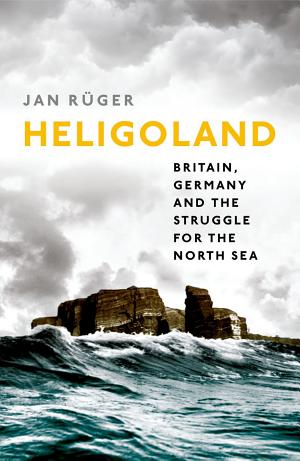
Heligoland: Britain, Germany and the Struggle for the North Sea
by Jan Ruger
Affiliate link: we may earn a commission
Won the Wolfson History Prize (2018).
On 18 April 1947, British forces set off the largest non-nuclear explosion in history. The target was a small island in the North Sea, thirty miles off the German coast, which for generations had stood as a symbol of Anglo-German conflict: Heligoland. A long tradition of rivalry was to come to an end here, in the ruins of Hitler's island fortress. Pressed as to why it was not prepared to give Heligoland back, the British government declared that the island represented everything that was wrong with the Germans: 'If any tradition was worth breaking, and if any sentiment was worth changing, then the German sentiment about Heligoland was such a one'. Drawing on a wide range of archival material, Jan Rüger explores how Britain and Germany have collided and collaborated in this North Sea enclave. For much of the nineteenth century, this was Britain's smallest colony, an inconvenient and notoriously discontented outpost at the edge of Europe. Situated at the fault line between imperial and national histories, the island became a metaphor for Anglo-German rivalry once Germany acquired it in 1890. Turned into a naval stronghold under the Kaiser and again under Hitler, it was fought over in both world wars. Heavy bombardment by the Allies reduced it to ruins, until the Royal Navy re-took it in May 1945. Returned to West Germany in 1952, it became a showpiece of reconciliation, but one that continues to bear the scars of the twentieth century. Tracing this rich history of contact and conflict from the Napoleonic Wars to the Cold War, Heligoland brings to life a fascinating microcosm of the Anglo-German relationship. For generations this cliff-bound island expressed a German will to bully and battle Britain; and it mirrored a British determination to prevent Germany from establishing hegemony on the Continent. Caught in between were the Heligolanders and those involved with them: spies and smugglers, poets and painters, sailors and soldiers. Heligoland is the compelling story of a relationship which has defined modern Europe.
Affiliate link: we may earn a commission
- Genre
- History
- Topics
- Anglo-German relationsNaval and military historyColonialism and territorial conflict
- Publisher
- Oxford University Press
- ISBN-13
- 9780191652707
Awards
- 2018Wolfson History PrizeWon
Other awarded books from Jan Ruger
Jan Ruger has no other awarded or shortlisted books yet.
If you liked Heligoland: Britain, Germany and the Struggle for the North Sea, you could also like these

Out of the Darkness: The Germans, 1942-2022
Frank Trentmann
3 score
A Line in the World: A Year on the North Sea Coast
Dorthe Nors
4 score

The Bombing War: Europe, 1939–1945
Richard Overy
3 score

Appeasing Hitler: Chamberlain, Churchill and the Road to War
Tim Bouverie
3 score

Resistance: The Underground War in Europe 1939-1945
Halik Kochanski
1 win · 8 score
Going Dutch: How England Plundered Holland's Glory
Lisa Jardine
1 win · 8 score
Facing the Ocean: The Atlantic and Its Peoples
Barry Cunliffe
1 win · 8 score
The Undeclared War
William L. Langer, S. Everett Gleason
1 win · 8 score

Hitler's Empire: How the Nazis Ruled Europe
Mark Mazower
1 win · 8 score
The Germans
Gordon A. Craig
4 score

Europe: A History
Norman Davies
3 score

Aftermath: Life in the Fallout of the Third Reich, 1945–1955
Harald Jähner
7 score

Life and Death in the Third Reich
Peter Fritzsche
3 score
Those Angry Days: Roosevelt, Lindbergh, and America's Fight Over World War II, 1939–1941
Lynne Olson
3 score
Travelers in the Third Reich: The Rise of Fascism: 1919–1945
Julia Boyd
1 win · 8 score