Affiliate link: we may earn a commission
Science & Technology
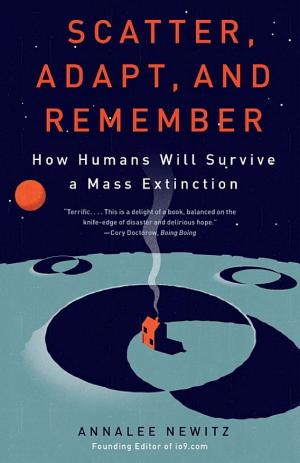
Scatter, Adapt, and Remember: How Humans Will Survive a Mass Extinction
by Annalee Newitz
Affiliate link: we may earn a commission
Shortlisted for the Los Angeles Times Book Prize for Science and Technology (2013).
In its 4.5 billion–year history, life on Earth has been almost erased at least half a dozen times: shattered by asteroid impacts, entombed in ice, smothered by methane, and torn apart by unfathomably powerful megavolcanoes. And we know that another global disaster is eventually headed our way. Can we survive it? How? As a species, Homo sapiens is at a crossroads. Study of our planet's turbulent past suggests that we are overdue for a catastrophic disaster, whether caused by nature or by human interference. It's a frightening prospect, as each of the Earth's past major disasters—from meteor strikes to bombardment by cosmic radiation—resulted in a mass extinction, where more than 75 percent of the planet's species died out. But although global disaster is all but inevitable, our chances of long-term species survival are better than ever. Life on Earth has come close to annihilation—humans have, more than once, narrowly avoided extinction just during the last million years—but every single time a few creatures survived, evolving to adapt to the harshest of conditions. This brilliantly speculative work of popular science focuses on humanity's long history of dodging the bullet, as well as on new threats that we may face in years to come. Most important, it explores how scientific breakthroughs today will help us avoid disasters tomorrow. From simulating tsunamis to studying central Turkey's ancient underground cities; from cultivating cyanobacteria for "living cities" to designing space elevators to make space colonies cost-effective; from using math to stop pandemics to studying the remarkable survival strategies of gray whales, scientists and researchers the world over are discovering the keys to long-term resilience and learning how humans can choose life over death. This remarkable and fascinating journey through the science of mass extinctions is a powerful argument about human ingenuity and our ability to change.
Affiliate link: we may earn a commission
- Genre
- Science & Technology
- Topics
- Mass extinctionHuman survivalSpace colonization
- Publisher
- Anchor
- ISBN-13
- 9780385535922
Awards
- 2013Los Angeles Times Book Prize for Science and TechnologyShortlisted
Other awarded books from Annalee Newitz
Annalee Newitz has no other awarded or shortlisted books yet.
If you liked Scatter, Adapt, and Remember: How Humans Will Survive a Mass Extinction, you could also like these
The Sixth Extinction: An Unnatural History
Elizabeth Kolbert
2 wins · 31 score
Countdown: Our Last, Best Hope for a Future on Earth?
Alan Weisman
1 win · 8 score
Vanished: An Unnatural History of Extinction
Sadiah Qureshi
6 score

The Diversity of Life
Edward O. Wilson
7 score
Children of Prometheus
Christopher Wills
3 score
The World Without Us
Alan Weisman
4 score

Believers: Making a Life at the End of the World
Lisa Wells
2 score
Life on a Young Planet: The First Three Billion Years of Evolution on Earth
Andrew H. Knoll
1 win · 5 score
The End of Evolution
Peter Ward
3 score

What the Wild Sea Can Be: The Future of the World’s Ocean
Helen Scales
4 score
A (Very) Short History of Life on Earth: 4.6 Billion Years in 12 Pithy Chapters
Henry Gee
1 win · 8 score
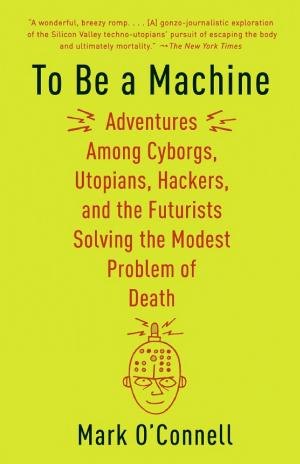
To Be a Machine: Adventures Among Cyborgs, Utopians, Hackers, and the Futurists Solving the Modest Problem of Death
Mark O'Connell
7 score
How to Clone a Mammoth: The Science of De-Extinction
Beth Shapiro
3 score
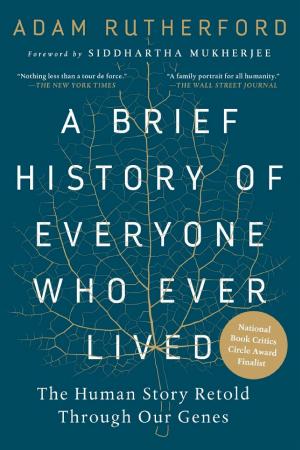
A Brief History of Everyone Who Ever Lived: The Human Story Retold Through Our Genes
Adam Rutherford
4 score
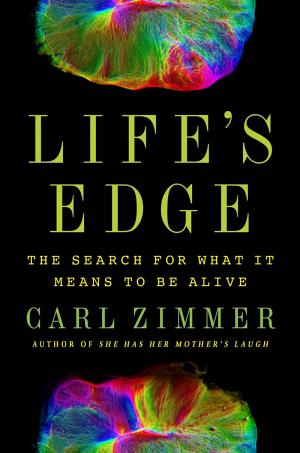
Life’s Edge: The Search for What It Means to Be Alive
Carl Zimmer
2 score