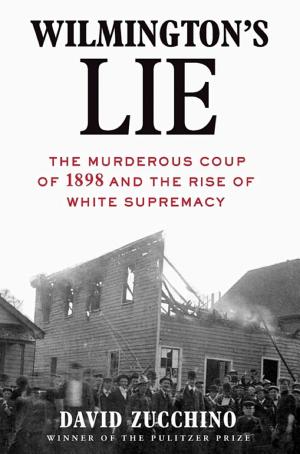
Affiliate link: we may earn a commission
History
Wilmington's Lie: The Murderous Coup of 1898 and the Rise of White Supremacy
Affiliate link: we may earn a commission
Won the Pulitzer Prize for General Nonfiction (2021).
Wilmington's Lie won the Pulitzer Prize. By the 1890s, Wilmington was North Carolina's largest city and a shining example of a mixed-race community. It was a bustling port city with a burgeoning African American middle class and a Fusionist government of Republicans and Populists that included black aldermen, police officers and magistrates. There were successful black-owned businesses and an African American newspaper, The Record. But across the state—and the South—white supremacist Democrats were working to reverse the advances made by former slaves and their progeny. In 1898, in response to a speech calling for white men to rise to the defense of Southern womanhood against the supposed threat of black predators, Alexander Manly, the outspoken young Record editor, wrote that some relationships between black men and white women were consensual. His editorial ignited outrage across the South, with calls to lynch Manly. But North Carolina's white supremacist Democrats had a different strategy. They were plotting to take back the state legislature in November "by the ballot or bullet or both," and then use the Manly editorial to trigger a "race riot" to overthrow Wilmington's multi-racial government. Led by prominent citizens including Josephus Daniels, publisher of the state's largest newspaper, and former Confederate Colonel Alfred Moore Waddell, white supremacists rolled out a carefully orchestrated campaign that included raucous rallies, race-baiting editorials and newspaper cartoons, and sensational, fabricated news stories. With intimidation and violence, the Democrats suppressed the black vote and stuffed ballot boxes (or threw them out), to win control of the state legislature on November 8th. Two days later, more than 2,000 heavily armed Red Shirts swarmed through Wilmington, torching the Record office, terrorizing women and children, and shooting at least sixty black men dead in the streets. The rioters forced city officials to resign at gunpoint and replaced them with mob leaders. Prominent blacks—and sympathetic whites—were banished. Hundreds of terrified black families took refuge in surrounding swamps and forests. This brutal insurrection is a rare instance of a violent overthrow of an elected government in the United States. It halted gains made by blacks and restored racism as official government policy, cementing white rule for another half century. It was not a "race riot," as the events of November 1898 came to be known, but rather a racially motivated rebellion launched by white supremacists.
Affiliate link: we may earn a commission
- Genre
- History
- Topics
- Wilmington 1898 coupWhite supremacy and racial violenceReconstruction-era race relations
- Publisher
- Atlantic Monthly Press
- ISBN-13
- 9780802146489
Awards
- 2021Pulitzer Prize for General NonfictionMajorWon
Other awarded books from David Zucchino
David Zucchino has no other awarded or shortlisted books yet.
If you liked Wilmington's Lie: The Murderous Coup of 1898 and the Rise of White Supremacy, you could also like these

The Crucible of Race: Black-White Relations in the American South since Emancipation
Joel Williamson
4 score

Blood at the Root: A Racial Cleansing in America
Patrick Phillips
4 score
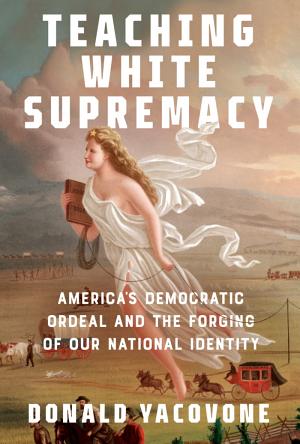
Teaching White Supremacy: America’s Democratic Ordeal and the Forging of our National Identity
Donald Yacovone
3 score
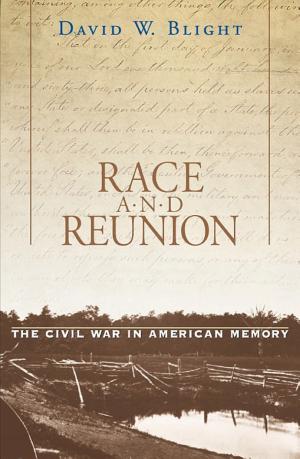
Race and Reunion: The Civil War in American Memory
David W. Blight
1 win · 8 score
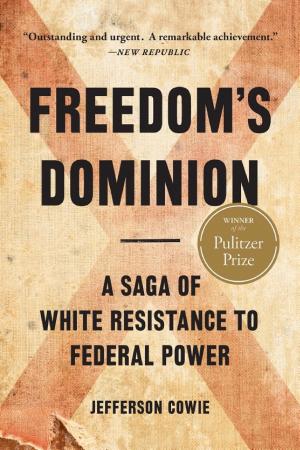
Freedom's Dominion: A Saga of White Resistance to Federal Power
Jefferson Cowie
1 win · 12 score
At the Hands of Persons Unknown: The Lynching of Black America
Philip Dray
7 score
Lynching and Spectacle: Witnessing Racial Violence in America, 1890-1940
Amy Louise Wood
3 score
The Barn: The Secret History of a Murder in Mississippi
Wright Thompson
3 score
White Supremacy: A Comparative Study in American and South African History
George M. Fredrickson
8 score
Black Majority: Negroes in Colonial South Carolina from 1670 through the Stono Rebellion
Peter H. Wood
4 score

The Ground Breaking: An American City and Its Search for Justice
Scott Ellsworth
2 score
Mother Emanuel: Two Centuries of Race, Resistance, and Forgiveness in One Charleston Church
Kevin Sack
4 score
Tumult and Silence at Second Creek: An Inquiry into a Civil War Slave Conspiracy
Winthrop D. Jordan
1 win · 8 score
Sweet Land of Liberty: The Forgotten Struggle for Civil Rights in the North
Thomas J. Sugrue
3 score
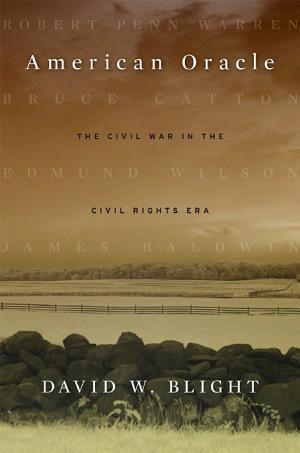
American Oracle: The Civil War in the Civil Rights Era
David Blight
1 win · 5 score