Nonfiction awards make a different kind of argument than fiction ones: not just what stories are worth telling, but which parts of the historical and current record deserve a book's worth of attention right now.
This page tracks that in two ways, starting in 1972 (the first year with enough major-award data for a fair top-20 read - several major nonfiction awards didn't exist yet before then): first the handful of topics that have broadly dominated the conversation, then six picked for their political or activism throughline rather than their size.
The most-awarded topics, decade by decade
The seven most-awarded topics overall since 1972, grouped by decade - the tallest bar is that decade's most-awarded topic. Hover or tap a group to see every topic's score that decade.
- American Politics & the Presidency
- Literary Lives & Criticism
- Global Politics & Foreign Policy
- Family, Memory & Personal Loss
- Civil Rights & Racial Justice
- War & Military Conflict
- Art, Music & Culture
American Politics & the Presidency opens as the most-awarded topic of the 1970s (492 points) - plausibly Watergate-era nonfiction processing a sitting president's resignation in 1974 - before Literary Lives & Criticism takes over in the 1980s with by far its highest score of any decade (800, well clear of its next-best 504 in the 2000s). American Politics & the Presidency reclaims the top spot in the 1990s (584, matching its 1980s score exactly), a decade bookended by the Cold War's end.
From the 2000s on, Global Politics & Foreign Policy takes over and holds the lead through two decades (612, then a decade-high 720 in the 2010s) - years dominated by the September 11 attacks, the Iraq and Afghanistan wars, and their long aftermath; War & Military Conflict rises alongside it in the 2000s (504) without ever overtaking it, plausibly because the same conflicts got tagged across both categories.
The 2020s belong to Civil Rights & Racial Justice, reaching its own highest point yet (600) - consistent with the wave of racial-justice nonfiction that followed George Floyd's murder in 2020 and covered in more detail below. Through all of this, Family, Memory & Personal Loss never tops a single decade but is rarely far from it - second place in three of the six (1990s, 2010s, 2020s) - the memoir and personal-history vein of nonfiction that's steadily present without one obvious external driver.
Political and activist currents
Same underlying data, but six topics picked for their activism or political throughline rather than their overall size.
Decade
- War & Military Conflict
- Civil Rights & Racial Justice
- Immigration & Migration
- Women's History & Feminism
- LGBTQ+ History & Identity
- Environment & Climate
War & Military Conflict. Rises through the 1980s (428, a decade of Cold War-era military history and WWII retrospectives reaching their 40th anniversary) before dipping in the 1990s (272), then climbs to its highest point in the 2000s (504) as the Iraq and Afghanistan wars generated a wave of contemporary war reporting and history.
It falls back through the 2010s (236) to its lowest point yet in the 2020s (88) as those conflicts wound down and drew less fresh nonfiction attention.
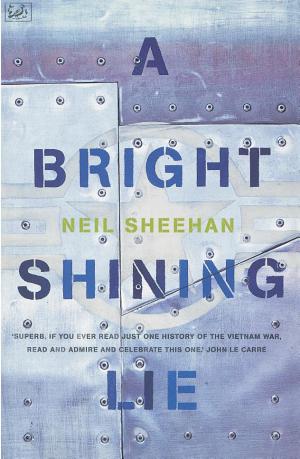
A Bright Shining Lie: John Paul Vann and America in Vietnam
Neil Sheehan
2 wins
Civil Rights & Racial Justice. Climbs almost every decade rather than spiking: an early rise through the 1980s (344, a decade of major civil-rights-era biographies and histories), a dip in the 1990s (244), then a renewed climb through the 2000s and a sharp jump in the 2010s (544) that coincides with the Black Lives Matter movement's founding in 2013.
It reaches its highest point yet in the 2020s (600) alongside the wave of racial-justice nonfiction that followed George Floyd's murder in 2020.

Parting the Waters: America in the King Years, 1954–63
Taylor Branch
4 wins
Immigration & Migration. Stays modest and fairly flat through the 1970s-2000s (48 to 96) before nearly doubling to its highest point yet in the 2020s (156) - plausibly tracking the sharpened political salience of immigration policy and the US-Mexico border in recent years' news cycles.
Stay True
Hua Hsu
2 wins
Women's History & Feminism. Rises through the 1990s (136, a generation after second-wave feminism, as women's-history scholarship matured into trade nonfiction) before falling sharply in the 2000s (20) - a decade when war-adjacent topics dominated nonfiction prize attention instead.
It then partially recovers through the 2010s (80) and settles back to 56 in the 2020s, without a single clean recent driver the way the other topics here have one.
Stranger in the Shogun's City: A Japanese Woman and Her World
Amy Stanley
2 wins
LGBTQ+ History & Identity. Absent from the 1970s data, then registers its first real presence in the 1980s (52) - the decade the AIDS crisis brought gay life and history into mainstream nonfiction, often through tragedy. It climbs further in the 1990s (76) before dropping back in the 2000s (20) and staying modest through the 2010s and 2020s (40 each) - a thin enough category throughout that a couple of books either way can swing a whole decade's total.
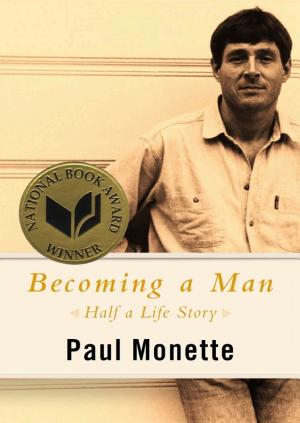
Becoming a Man: Half a Life Story
Paul Monette
1 win
Environment & Climate. Starts at a modest 104 in the 1970s (the decade of the first Earth Day and the EPA's founding) before dropping through the 80s and 90s, then climbs steadily from the 2000s (84) to its highest point in the 2010s (156) - plausibly tracking the years around the Paris Agreement (2015) and climate activism's rise to mainstream political attention - before settling back somewhat in the 2020s (112).
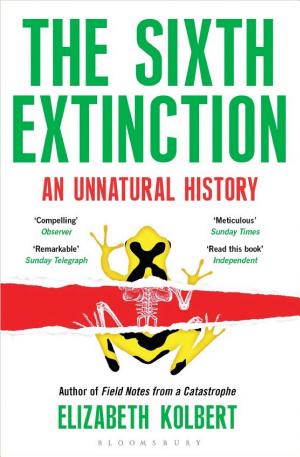
The Sixth Extinction: An Unnatural History
Elizabeth Kolbert
2 wins
Methodology. Each award-winning topic is one of up to three AI-classified themes tagged to a book (e.g. "civil rights movement", "history of science"), grouped into a fixed set of broader categories - a different, nonfiction-specific taxonomy from the one used for fiction. The grouped bar chart shows the seven highest-scoring categories overall; the line chart below it is a hand-picked selection of six for this article, not simply the next-highest scoring ones. Scores use the same win/shortlist/longlist weighting as the rest of this site (see how the index works), restricted to major-tier awards only and summed across just the top 20 scoring books per year, starting in 1972. The notes under the political/activism chart each pair a decade's number with a plausible real-world reason it moved - reasonable historical readings of a timing match, not a claim that either was proven to cause the other. See the full nonfiction topics index for every individual topic across every nonfiction book.