Thinking Machines: Award-Winning Novels and Nonfiction About AI and Technology
Long before anyone typed a question into a chatbot, novelists were imagining thinking machines - and journalists and scientists have been chronicling the real ones for decades. We picked sixteen prize winners: first the novels, from a self-aware lunar supercomputer to a robot girlfriend who starts to want more, then the nonfiction, from the birth of the computer industry to today's race for artificial intelligence.
All shelvesUpdated October 2026
You've reached the 150-character search limit.
Search through 7,609 books
Fiction books
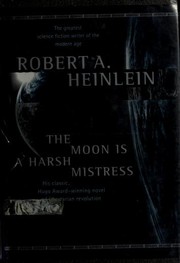
- WonHugo Award for Best Novel (1967)
- ShortlistedHugo Award for Best Novel (1966)
- ShortlistedNebula Award for Best Novel (1966)
Why it’s here: Winner of the Hugo Award and shortlisted for the Nebula. A former penal colony on the Moon rises up against its masters on Earth, led by an unlikely group: a computer technician, a young agitator, an elderly academic - and Mike, a supercomputer whose self-awareness only the inner circle knows about. Robert A. Heinlein's classic is a revolution story with a machine at its heart.
Perfect for: Readers who want the classic that made a thinking computer a hero.
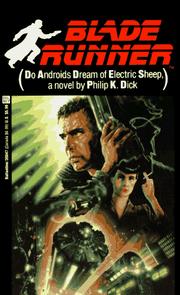
- ShortlistedNebula Award for Best Novel (1968)
Why it’s here: Shortlisted for the Nebula Award. After a world war has wiped out whole species, real animals are precious and androids are so lifelike they can pass for human. Rick Deckard is a bounty hunter paid to track down rogue androids hiding on Earth and "retire" them. Philip K. Dick's short, unsettling novel asks what separates a person from a perfect copy.
Perfect for: Film fans curious about the novel behind Blade Runner.
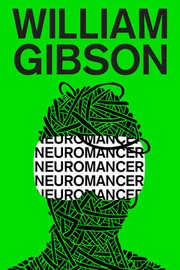
- WonHugo Award for Best Novel (1985)
- WonNebula Award for Best Novel (1984)
- WonPhilip K. Dick Award (1985)
Why it’s here: Winner of the Hugo, Nebula and Philip K. Dick Awards. Case was the best data thief in the matrix until the people he crossed burned out his nervous system and locked him out of cyberspace. Now a mysterious employer offers him one last run - against an unthinkably powerful artificial intelligence. William Gibson's debut put "cyberspace" into everyday language.
Perfect for: Readers who want to see where cyberpunk - and much of our picture of the internet - began.
- ShortlistedWomen's Prize for Fiction (2004)Major
- ShortlistedThe Booker Prize (2003)Major
Why it’s here: Shortlisted for the Booker Prize and the Women's Prize for Fiction. Snowman may be the last human alive after a plague overwhelmed mankind. Mourning his best friend Crake and the elusive Oryx they both loved, he sets out through the wilderness that was recently a city - in a world where corporations took humanity on an uncontrolled genetic engineering ride. Margaret Atwood's near future feels both familiar and strange.
Perfect for: Literary readers who want technology gone wrong without spaceships.
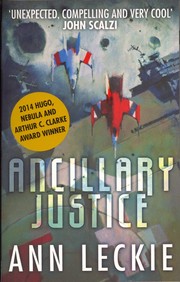
- WonArthur C. Clarke Award (2014)
- WonHugo Award for Best Novel (2014)
- WonBSFA Award for Best Novel (2013)
- WonNebula Award for Best Novel (2013)
Why it’s here: Winner of the Hugo, Nebula, Arthur C. Clarke and BSFA Awards. The warship Justice of Toren once controlled thousands of bodies through its AI mind. Now it is destroyed, and all that remains is a single human body with one pair of hands and one mouth to tell its story - and one target for revenge. Ann Leckie's debut was the first novel to win the Hugo, Nebula and Clarke in the same year.
Perfect for: Space opera fans who want a story told from inside a machine's mind.
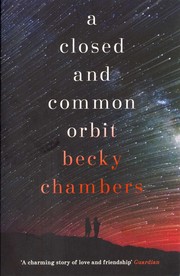
- ShortlistedArthur C. Clarke Award (2017)
- ShortlistedHugo Award for Best Novel (2017)
- ShortlistedBSFA Award for Best Novel (2016)
Why it’s here: Shortlisted for the Hugo, Arthur C. Clarke and BSFA Awards. Lovelace used to be a ship's artificial intelligence. After a total shutdown she wakes up in a synthetic body, in a world where her kind is illegal - and Pepper, the engineer who helped reinstall her, is determined to help her start over. Becky Chambers' novel can be read on its own and is about friendship, belonging and what it means to have a body.
Perfect for: Readers who want warm, hopeful science fiction instead of robot apocalypse.
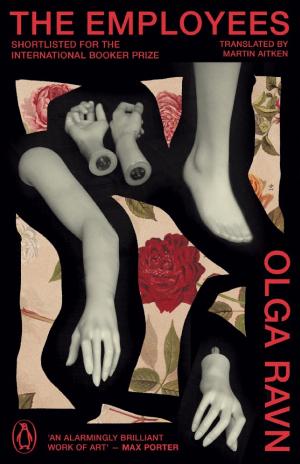
Why it’s here: Shortlisted for the International Booker Prize. Told entirely in staff reports and memos, the human and humanoid crew of the Six-Thousand Ship complain about their daily tasks - until the ship takes on strange objects from the planet New Discovery and the crew become deeply attached to them. Olga Ravn's short novel, translated from Danish by Martin Aitken, is funny and eerie, and a sharp look at life governed by productivity.
Perfect for: Readers who like short, strange, literary books they can finish in an evening.
Why it’s here: Winner of the Arthur C. Clarke Award. Annie has dinner ready for Doug every night and wears the outfits he buys her - she was designed that way, because Annie is a robot. But she starts to push against her stifled existence and to imagine the impossible: a life without Doug. Sierra Greer's novel uses an AI companion to look hard at control, consent and what it means to want something for yourself.
Perfect for: Readers ready for a provocative, adult novel about AI companions.
Nonfiction books

- WonNational Book Award for Nonfiction (1980)Major
- WonPulitzer Prize for General Nonfiction (1980)Major
- ShortlistedNational Book Critics Circle Award for Nonfiction (1979)Major
Why it’s here: Winner of the Pulitzer Prize and the National Book Award. Douglas Hofstadter takes Kurt Gödel's revolutionary ideas about mathematics and uses them - alongside the art of Escher and the music of Bach - to ask how a mind can arise from simple parts, and whether a machine could have one. A playful, puzzle-filled classic that inspired a generation of computer scientists.
Perfect for: Puzzle lovers with patience - it's long, playful and demanding.
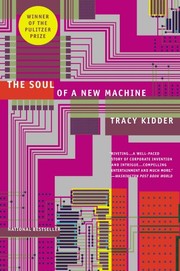
- WonNational Book Award for Nonfiction (1982)Major
- WonPulitzer Prize for General Nonfiction (1982)Major
Why it’s here: Winner of the Pulitzer Prize and the National Book Award. Tracy Kidder follows one company's engineers in their feverish race to bring a new computer to market at the start of the 1980s. The machines have changed since; the all-nighters, the go-for-broke ambition and the culture of the tech industry are all already here.
Perfect for: Anyone who works in tech and wants to see where the culture comes from.
- WonRoyal Society Science Book Prize (2012)
- WonPEN/E.O. Wilson Literary Science Writing Award (2012)
- ShortlistedAndrew Carnegie Medal for Excellence in Nonfiction (2012)Major
Why it’s here: Winner of the Royal Society Science Book Prize and shortlisted for the National Book Critics Circle Award. From Africa's talking drums and the invention of the alphabet to Morse code and Claude Shannon's information theory, James Gleick tells the story of how humanity learned to store and send information - with Charles Babbage and Ada Lovelace along the way - and how today's flood of it is changing us.
Perfect for: Curious readers who want the long history behind the digital age.
- ShortlistedBaillie Gifford Prize for Non-Fiction (2018)Major
- ShortlistedRoyal Society Science Book Prize (2018)
Why it’s here: Shortlisted for the Baillie Gifford Prize and the Royal Society Science Book Prize. Would you rather a human or an algorithm decided your fate in court? Mathematician Hannah Fry tours the algorithms that already make decisions about our health, money, travel and justice - showing what they do well, where they fail, and whether they are really better than the people they replace.
Perfect for: The best place to start the nonfiction - short, clear and no maths needed.
 Nonfiction
Shoshana Zuboff
- ShortlistedThe Orwell Prize for Political Writing (2020)
- ShortlistedFinancial Times and Standard Chartered Business Book of the Year Award (2019)
Why it’s here: Shortlisted for the Financial Times Business Book of the Year and the Orwell Prize for Political Writing. The early optimism of the internet is gone. Shoshana Zuboff shows how tech companies came to gather our data and profit not only from predicting our behaviour but from changing it - and argues that we can still decide what kind of digital future we want.
Perfect for: Readers who want the big-picture argument - it's long and dense, but it changed the debate.
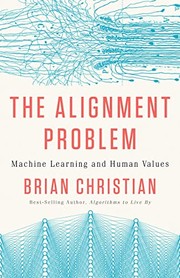
- ShortlistedLos Angeles Times Book Prize for Science and Technology (2020)
Why it’s here: Shortlisted for the Los Angeles Times Book Prize. What happens when the systems we teach don't do what we want? Brian Christian follows the researchers working on that question - from hiring tools with hidden gender bias and algorithms that help decide bail to self-driving cars - and traces how machine learning grew into the AI of today.
Perfect for: Readers who want to understand what the AI safety debate is actually about.
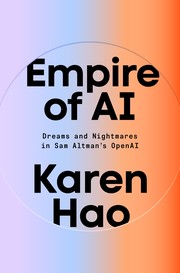
- WonNational Book Critics Circle Award for Nonfiction (2025)Major
- WonLos Angeles Times Book Prize for Science and Technology (2025)
Why it’s here: Winner of the National Book Critics Circle Award and the Los Angeles Times Book Prize. When journalist Karen Hao began covering OpenAI in 2019, it was a nonprofit with safety as its core mission. Drawing on sources inside the company and reporting around the world - from Silicon Valley engineers to Kenyan data workers and Chilean water activists - she shows what AI at this scale really takes: chips, data, cheap human labour, and vast amounts of energy and water.
Perfect for: Readers who want the inside story of OpenAI and the hidden costs of the AI boom.
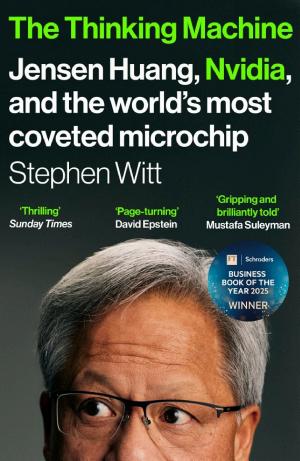 Nonfiction
Stephen Witt
- WonFinancial Times and Standard Chartered Business Book of the Year Award (2025)
Why it’s here: Winner of the Financial Times Business Book of the Year. Nvidia went from making equipment for video games to dominating the market for the chips that power artificial intelligence. With unprecedented access to its CEO Jensen Huang, Stephen Witt tells the story of the engineers, the gambles and the leader behind the company at the centre of the AI boom.
Perfect for: Readers curious about the hardware and business side of the AI race.