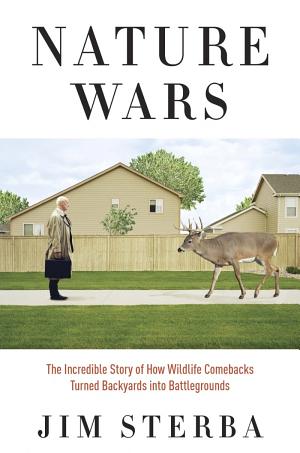
Affiliate link: we may earn a commission
Science & Technology
Nature Wars: The Incredible Story of How Wildlife Comebacks Turned Backyards into Battlegrounds
by Jim Sterba
Affiliate link: we may earn a commission
Shortlisted for the Los Angeles Times Book Prize for Current Interest (2012).
This may be hard to believe but it is very likely that more people live in closer proximity to more wild animals, birds and trees in the eastern United States today than anywhere on the planet at any time in history. For nature lovers, this should be wonderful news -- unless, perhaps, you are one of more than 4,000 drivers who will hit a deer today, your child's soccer field is carpeted with goose droppings, coyotes are killing your pets, the neighbor's cat has turned your bird feeder into a fast-food outlet, wild turkeys have eaten your newly-planted seed corn, beavers have flooded your driveway, or bears are looting your garbage cans. For 400 years, explorers, traders, and settlers plundered North American wildlife and forests in an escalating rampage that culminated in the late 19th century's "era of extermination." By 1900, populations of many wild animals and birds had been reduced to isolated remnants or threatened with extinction, and worry mounted that we were running out of trees. Then, in the 20th century, an incredible turnaround took place. Conservationists outlawed commercial hunting, created wildlife sanctuaries, transplanted isolated species to restored habitats and imposed regulations on hunters and trappers. Over decades, they slowly nursed many wild populations back to health. But after the Second World War something happened that conservationists hadn't foreseen: sprawl. People moved first into suburbs on urban edges, and then kept moving out across a landscape once occupied by family farms. By 2000, a majority of Americans lived in neither cities nor country but in that vast in-between. Much of sprawl has plenty of trees and its human residents offer up more and better amenities than many wild creatures can find in the wild: plenty of food, water, hiding places, and protection from predators with guns. The result is a mix of people and wildlife that should be an animal-lover's dream-come-true but often turns into a sprawl-dweller's nightmare. Nature Wars offers an eye-opening look at how Americans lost touch with the natural landscape, spending 90 percent of their time indoors where nature arrives via television, films and digital screens in which wild creatures often behave like people or cuddly pets. All the while our well-meaning efforts to protect animals allowed wild populations to burgeon out of control, causing damage costing billions, degrading ecosystems, and touching off disputes that polarized communities, setting neighbor against neighbor.
Affiliate link: we may earn a commission
- Genre
- Science & Technology
- Topics
- Wildlife conservationHuman-wildlife conflictSuburban sprawl and ecology
- Publisher
- Crown
- ISBN-13
- 9780307985668
Awards
- 2012Los Angeles Times Book Prize for Current InterestShortlisted
Other awarded books from Jim Sterba
Jim Sterba has no other awarded or shortlisted books yet.
If you liked Nature Wars: The Incredible Story of How Wildlife Comebacks Turned Backyards into Battlegrounds, you could also like these
The Age of Deer: Trouble and Kinship with Our Wild Neighbors
Erika Howsare
2 score

The Diversity of Life
Edward O. Wilson
7 score

The Beast in the Garden: A Modern Parable of Man and Nature
David Baron
3 score
Crossings: How Road Ecology Is Shaping the Future of Our Planet
Ben Goldfarb
2 score

Wild Souls: Freedom and Flourishing in the Non-Human World
Emma Marris
3 score

Home from Nowhere: Remaking Our Everyday World for the 21st Century
James Howard Kunstler
3 score
Eager: The Surprising, Secret Life of Beavers and Why They Matter
Ben Goldfarb
1 win · 5 score
The Control of Nature
John McPhee
3 score

Coyote America: A Natural and Supernatural History
Dan Flores
2 score

Dust Bowl: The Southern Plains in the 1930s
Donald Worster
1 win · 8 score
Sounds Wild and Broken: Sonic Marvels, Evolution's Creativity, and the Crisis of Sensory Extinction
David George Haskell
6 score
Scatter, Adapt, and Remember: How Humans Will Survive a Mass Extinction
Annalee Newitz
3 score

On the Backs of Tortoises: Darwin, the Galapagos, and the Fate of an Evolutionary Eden
Elizabeth Hennessy
2 score
Where the Buffalo Roam: Restoring America's Great Plains
Anne Matthews
4 score

Breathing Space: How Allergies Shape Our Lives and Landscapes
Gregg Mitman
1 score
Similar Topics
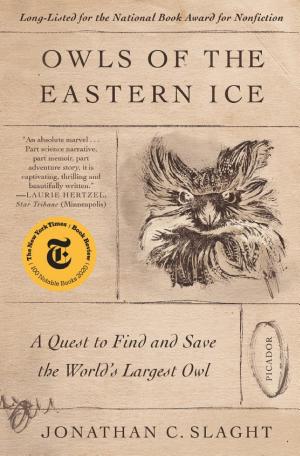
Owls of the Eastern Ice: A Quest to Find and Save the World's Largest Owl
Jonathan Slaght
1 win · 5 score
Wildlife conservationAutumn of the Eagle
George Laycock
4 score
Wildlife conservation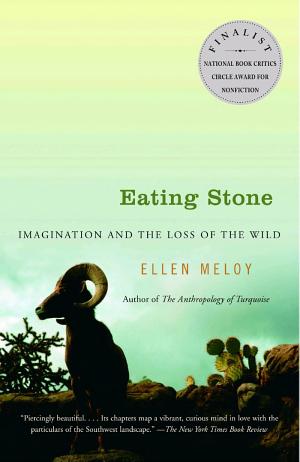
Eating Stone: Imagination and the Loss of the Wild
Ellen Meloy
4 score
Wildlife conservation
The Tree Where Man Was Born
Peter Matthiessen
4 score
Wildlife conservationA Different Nature: The Paradoxical World of Zoos and Their Uncertain Future
David Hancocks
3 score
Wildlife conservationThe Beast in the Garden: A Modern Parable of Man and Nature
David Baron
3 score
Human-wildlife conflict
Walking With the Great Apes: Jane Goodall, Dian Fossey, Biruté Galdikas
Sy Montgomery
3 score
Wildlife conservation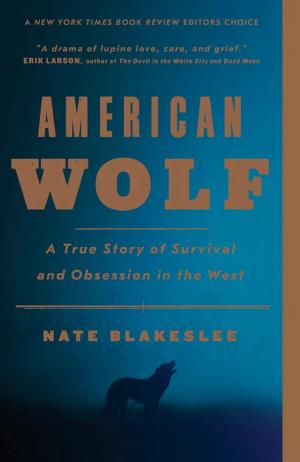
American Wolf: A True Story of Survival and Obsession in the West
Nate Blakeslee
2 score
Wildlife conservationCrossings: How Road Ecology Is Shaping the Future of Our Planet
Ben Goldfarb
2 score
Wildlife conservationThe Dragon Behind the Glass: A True Story of Power, Obsession, and the World’s Most Coveted Fish
Emily Voigt
2 score
Wildlife conservation