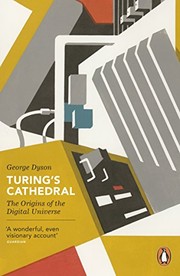
Turing’s Cathedral: The Origins of the Digital Universe
George Dyson
#3504 of 3,809 books · #521 in Science & Technology
Shortlisted for the Los Angeles Times Book Prize for Science and Technology (2012).
In 1936, twenty-four-year-old Alan Turing announced, "It is possible to invent a single machine which can be used to compute any computable sequence." In Turing's Cathedral, George Dyson focuses on a small group of men and women, led by John von Neumann at the Institute for Advanced Study in Princeton, New Jersey, who built one of the first computers to realize Alan Turing's vision of a Universal Machine. Their work would break the distinction between numbers that mean things and numbers that do things—and our universe would never be the same. Using five kilobytes of memory (the amount allocated to displaying the cursor on a computer desktop of today), they achieved unprecedented success in both weather prediction and nuclear weapons design, while tackling, in their spare time, problems ranging from the evolution of viruses to the evolution of stars. Dyson's account sheds important new light on how the digital universe exploded in the aftermath of World War II. The proliferation of both codes and machines was paralleled by two historic developments: the decoding of self-replicating sequences in biology and the invention of the hydrogen bomb. It's no coincidence that the most destructive and the most constructive of human inventions appeared at exactly the same time. In retracing how Alan Turing's one-dimensional model became John von Neumann's two-dimensional implementation, Turing's Cathedral offers a series of provocative suggestions as to where the digital universe, now fully three-dimensional, may be heading next.
- Publisher
- Pantheon
- ISBN-13
- 9780307907066
- Genre
- Topics
Awards
- Los Angeles Times Book Prize for Science and TechnologyShortlisted(2012)
Other awarded books from George Dyson
George Dyson has no other awarded or shortlisted books yet.
If you liked Turing’s Cathedral: The Origins of the Digital Universe, you could also like these
The Computer from Pascal to Von Neumann
Herman H. Goldstine
1 win · 9 score
The Code Book: The Science of Secrecy from Ancient Egypt to Quantum Cryptography
Simon Singh
0 wins · 3 score
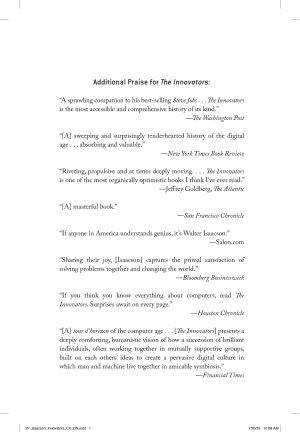
The Innovators: How a Group of Hackers, Geniuses, and Geeks Created the Digital Revolution
Walter Isaacson
0 wins · 3 score
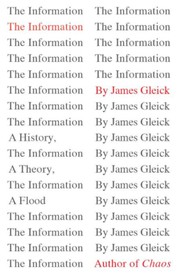
The Information: A History, a Theory, a Flood
James Gleick
2 wins · 24 score
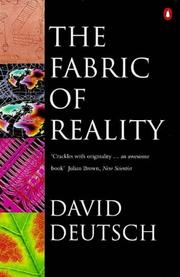
The Fabric of Reality: The Science of Parallel Universes and Its Implications
David Deutsch
0 wins · 3 score
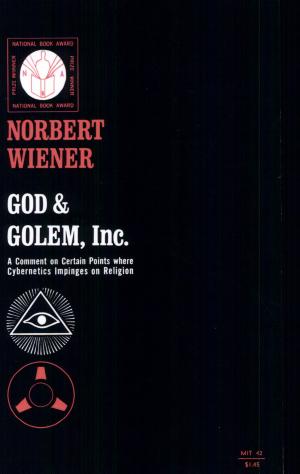
God & Golem, Inc.: A Comment on Certain Points Where Cybernetics Impinges on Religion
Norbert Wiener
1 win · 12 score

Scientific Temperaments: Three Lives in Contemporary Science
Philip J. Hilts
0 wins · 4 score

Disturbing the Universe
Freeman Dyson
0 wins · 8 score
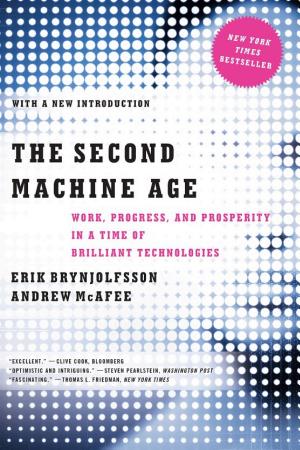
The Second Machine Age: Work, Progress, and Prosperity in a Time of Brilliant Technologies
Erik Brynjolfsson and Andrew McAfee
0 wins · 3 score
The Big Bang of Numbers: How to Build the Universe Using Only Math
Manil Suri
0 wins · 2 score
Exactly: How Precision Engineers Created the Modern World
Simon Winchester
0 wins · 3 score
To Be a Machine: Adventures Among Cyborgs, Utopians, Hackers, and the Futurists Solving the Modest Problem of Death
Mark O'Connell
0 wins · 7 score

Edison’s Eve: A Magical History of the Quest for Mechanical Life
Gaby Wood
0 wins · 4 score
Infinite Powers
Steven Strogatz
0 wins · 3 score

Artificial Life: A Report from the Frontier Where Computers Meet Biology
Steven Levy
0 wins · 3 score
