A book prize is a small, yearly argument about what fiction should be paying attention to. Some topics barely move - Family shows up among the year's most-awarded fiction almost every decade - while others spike and vanish for decades at a time. This page tracks both, starting in the 1950s (only 2 of today's 10 major awards existed earlier): first the handful of topics that have broadly dominated the conversation, then six picked for their political or social throughline rather than their size.
The broad, stable topics
The seven most-awarded topics overall since 1950, grouped by decade - the tallest bar is that decade's most-awarded topic. Hover or tap a group to see every topic's score that decade.
- Family
- Self-Discovery & Meaning
- Love, Romance & Marriage
- War & Conflict
- Race, Slavery & Colonialism
- Grief, Loss & Mortality
- Memory & History
Family is the tallest bar in most of these decades - 6 of the 8 - but it isn't a lock early on: Self-Discovery & Meaning briefly outranks it in the 1960s (176 vs. 168, plausibly the counterculture and human-potential movement leaving its mark on fiction), and War & Conflict overtakes it during the Vietnam-era 1970s (272 vs. 260). From the 1980s on, though, Family pulls decisively ahead and stays there. Love, Romance & Marriage and Grief, Loss & Mortality stay broadly present without an obvious single driver, and Race, Slavery & Colonialism is covered in more detail below. Memory & History is the one still broadly climbing across the whole period - from 52 points in the 1950s to 374 in the 2010s - which looks less like a response to any one event and more like the decades-long rise of historical fiction and "memory studies" as a prize-favored mode of writing.
Political and cultural currents
Same underlying data, but six topics picked for their activism or political throughline rather than their overall size.
Decade
- War & Conflict
- Race, Slavery & Colonialism
- Immigration & Displacement
- Social Class & Poverty
- Gender & Feminism
- LGBTQ+ Identity & Relationships
War & Conflict. Comes in three distinct waves that line up with real wars: a rise through the WWII-aftermath 1950s (168 points, likely fiction processing the war just concluded, plus Korea), a second peak through the Vietnam-era 1970s (272), and by far its highest point during the Iraq/Afghanistan "war on terror" 2000s (524) - before falling back to roughly its 1950s level by the 2020s (176) as those conflicts wound down.
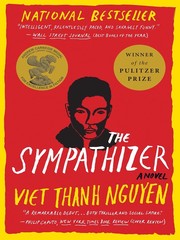
The Sympathizer
Viet Thanh Nguyen
2 wins
Race, Slavery & Colonialism. Climbs almost every decade rather than spiking: a first jump through the civil-rights-era 1960s (124, up from 60 in the 1950s), then a longer rise through the 1980s-90s that plausibly tracks the growing prominence of Black, postcolonial, and multicultural voices in literary prizes over those decades, before a further jump to its peak in the 2010s (360) that coincides with the Black Lives Matter movement (founded 2013) - staying elevated through the George Floyd-era 2020s (308).
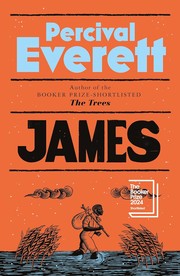
James
Percival Everett
4 wins
Immigration & Displacement. Starts from almost nothing in the 1950s (40) and 60s (32) - unsurprising given the restrictive, national-origin-based US immigration quotas in place until the Immigration and Nationality Act of 1965 - then climbs steadily as the more diverse immigration those reforms allowed reshaped English-language literary communities, reaching a peak in the 2000s (366) and staying high through the 2010s (358), years that also saw the Syrian refugee crisis and sharpened immigration politics dominate the news.
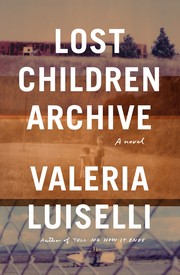
Lost Children Archive
Valeria Luiselli
3 wins
Social Class & Poverty. Climbs from a modest 84 points in the 1950s to its own peak in the 2000s (406) - a rise that's harder to tie to one single event than the topics above it. The more honest reading is a gradual one: economic inequality becoming a bigger and bigger literary subject as globalization-era wealth gaps widened over the decades, rather than a response to any single crisis.
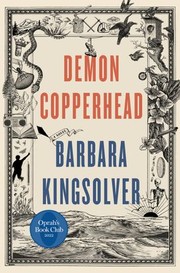
Demon Copperhead
Barbara Kingsolver
3 wins
Gender & Feminism. Rises through the 1970s and 80s (28, then 72) as second-wave feminism reshaped what fiction was expected to say about women's lives, holds that level through the 90s, dips in the 2000s (20) - a decade when War & Conflict dominated prize attention instead - then jumps to its clearest peak in the 2010s (118), plausibly tracking the resurgence of mainstream feminist discourse that culminated in the #MeToo movement (2017), before dropping back in the 2020s (46).
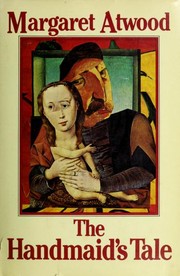
The Handmaid's Tale
Margaret Atwood
2 wins
LGBTQ+ Identity & Relationships. Close to entirely absent through the 1950s and 60s, then registers its first real appearance in the 1970s (64) - right after the 1969 Stonewall riots kicked off the modern gay liberation movement. It dips through the 1980s (20), the height of the AIDS crisis, before climbing back through the 90s and 2000s as the marriage-equality movement gained ground, culminating in nationwide legalization in 2015. The 2010s dip (12) doesn't have a clean explanation from the data alone - it's a thin enough category that a couple of books either way swings it - before its highest point yet in the 2020s (104): the only one of the six still climbing from the 2010s into the 2020s.
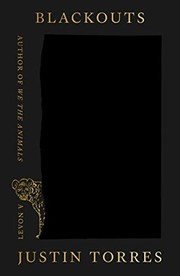
Blackouts
Justin Torres
1 win
Methodology. Each award-winning topic is one of up to three AI-classified themes tagged to a book (e.g. "family curse and generational trauma"), grouped into a fixed set of broader categories. The grouped bar chart shows the seven highest-scoring categories overall; the line chart below it is a hand-picked selection of six for this article, not simply the next-highest scoring ones. Scores use the same win/shortlist/longlist weighting as the rest of this site (see how the index works), restricted to major-tier awards only and summed across just the top 20 scoring books per year. The notes under the political/cultural chart each pair a decade's number with a plausible real-world reason it moved - reasonable historical readings of a timing match, not a claim that either was proven to cause the other. See the full topics index for every individual topic across every book.