
Affiliate link: we may earn a commission
Science & Technology
Everything Is Predictable: How Bayes' Remarkable Theorem Explains the World
by Tom Chivers
Affiliate link: we may earn a commission
Shortlisted for the Royal Society Science Book Prize (2024).
Thomas Bayes was an eighteenth-century Presbyterian minister and amateur mathematician whose obscure life belied the profound impact of his work. Like most research into probability at the time, his theorem was mainly seen as relevant to games of chance, like dice and cards. But its implications soon became clear. Bayes' theorem helps explain why highly accurate screening tests can lead to false positives, causing unnecessary anxiety for patients. A failure to account for it in court has put innocent people in jail. But its influence goes far beyond practical applications. A cornerstone of rational thought, Bayesian principles are used in modelling and forecasting. 'Superforecasters', a group of expert predictors who outperform CIA analysts, use a Bayesian approach. And many argue that Bayes' theorem is not just a useful tool, but a description of almost everything - that it is the underlying architecture of rationality, and of the human brain. Fusing biography, razor-sharp science communication and intellectual history, Everything Is Predictable is a captivating tour of Bayes' theorem and its impact on modern life. From medical testing to artificial intelligence, Tom Chivers shows how a single compelling idea can have far-reaching consequences.
Affiliate link: we may earn a commission
- Genre
- Science & Technology
- Topics
- Bayesian probabilityStatistics and rationalityHistory of mathematics
- Publisher
- Weidenfeld & Nicolson
- ISBN-13
- 9781399604031
Awards
- 2024Royal Society Science Book PrizeShortlisted
Other awarded books from Tom Chivers
Tom Chivers has no other awarded or shortlisted books yet.
If you liked Everything Is Predictable: How Bayes' Remarkable Theorem Explains the World, you could also like these

Prophecy: Prediction, Power and the Fight for the Future, from Ancient Oracles to AI
Carissa Véliz
3 score
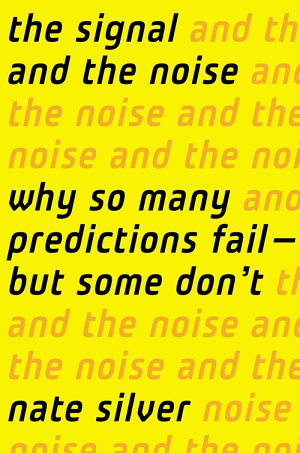
The Signal and the Noise: Why So Many Predictions Fail—but Some Don’t
Nate Silver
1 win · 8 score
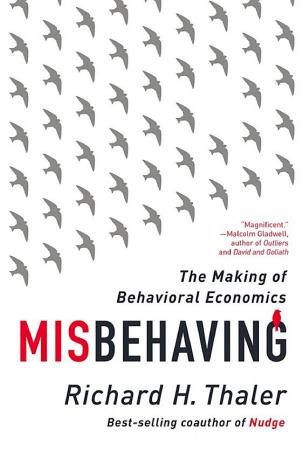
Misbehaving: The Making of Behavioural Economics
Richard Thaler
3 score
The Drunkard's Walk: How Randomness Rules Our Lives
Leonard Mlodinow
3 score
Stumbling on Happiness
Daniel Gilbert
1 win · 8 score
The Black Swan: The Impact of the Highly Improbable
Nassim Nicholas Taleb
3 score
Infinite Powers
Steven Strogatz
3 score
Reckoning With Risk
Gerd Gigerenzer
3 score
Critical Mass: How One Thing Leads to Another
Philip Ball
1 win · 8 score
Thinking, Fast and Slow
Daniel Kahneman
1 win · 8 score
Alex Through the Looking-Glass: How Life Reflects Numbers and Numbers Reflect Life
Alex Bellos
3 score
Chaos: Making a New Science
James Gleick
8 score
Playing with Reality: How Games Have Shaped Our World
Kelly Clancy
2 score
Turing’s Cathedral: The Origins of the Digital Universe
George Dyson
3 score
We Need To Talk About Kelvin
Marcus Chown
3 score
Similar Topics
Mathematical Thought from Ancient to Modern Times
Morris Kline
4 score
History of mathematics
Mathematics: The Loss of Certainty
Morris Kline
4 score
History of mathematics
Fermat’s Last Theorem: Unlocking the Secret of an Ancient Mathematical Problem
Amir D. Aczel
3 score
History of mathematics
Why Beauty is Truth: A History of Symmetry
Ian Stewart
3 score
History of mathematics